


Decameron / Decameron
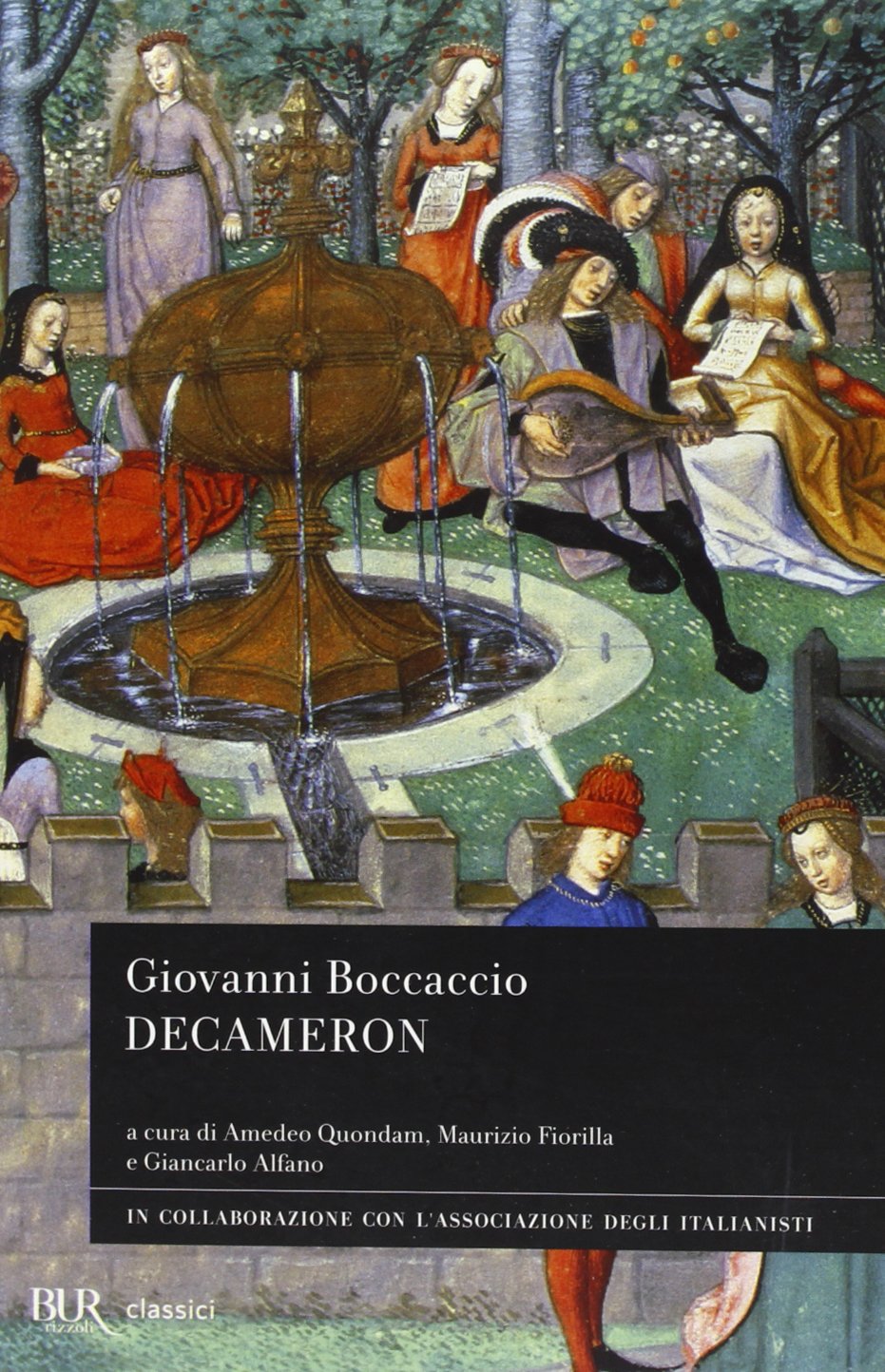 “>
“>
Author:
Giovanni Boccaccio
Country:
Italy (IT)
Book Theme:
Classic novels and Authors representing your country culture
Publisher:
Rizzoli
Publishing Year:
2013
Giovanni Boccaccio was an Italian writer, poet, and humanist, best known for The Decameron, a collection of 100 tales told by a group of young people sheltering from the plague. Born in Certaldo or Florence, he studied commerce and law before dedicating himself to literature. Influenced by Dante and Petrarch, Boccaccio blended realism and allegory, capturing a wide range of human experiences. His works contributed to the development of prose fiction and the Italian literary language.
National Award for Children’s and Young People’s
Abstract
The Decameron opens with a dramatic description of the black plague that devastated
Florence in 1348. In this climate of despair and death, ten young people (seven women and
three men), well educated and belonging to the Florentine bourgeoisie, decide to take refuge
in the countryside to escape the contagion. There, to distract themselves from the pain and
chaos of the city, they decide to tell each other a story every day for ten days under the
guidance of a king or queen in turn. This literary project gives life to the one hundred novels
that make up the work. The first day, governed by Panfilo, serves as an introduction and has a
free theme. The stories here are very varied and range from cunning to luck, from irony to
criticism to religion. The most famous story is that of Ser Ciappelletto, a corrupt man who,
with a last false confession, manages to die with a reputation for holiness. The religious hypocrisy and credulity of the people are brought to light with biting irony. Other stories tell of mockery, cunning or grotesque accidents, such as the story of judge Musciatto Franzesi who entrusts his business to the worst possible man, who paradoxically turns out to be very skilled. The second day, chaired by Neifile, is dedicated to characters who, after a series of misadventures, unexpectedly find salvation and fortune. The protagonists of these novels often travel abroad, live betrayals, shipwrecks, kidnappings and misfortunes, but in the end they get what they want. Emblematic is the story of Andreuccio da Perugia, a naive young
man who goes to Naples to buy horses, gets cheated, but ends up finding a treasure in a
bishop’s tomb. The initial misfortunes often serve to test the intelligence or stamina of the
protagonist, who triumphs thanks to his own ingenuity or the help of fate. The third day,
under the guidance of Filomena, celebrates who manages to achieve a goal (often love or
money) thanks to their intelligence or cunning. The novels here are lively and often ironic,
full of deceit, disguises, tricks. The most famous is that of Masetto da Lamporecchio, a young
man who pretends to be mute to be hired in a convent of nuns. Once there, all the nuns fight
for his favors. Other stories tell of lovers hidden in trunks, mocks jealous husbands, and
women who know how to save their reputation with skillful words. The fourth day, directed
by Fiammetta, is the darkest of all the first volume: the theme is that of unhappy love, often
tragic. Here love is passion that leads to ruin or death, and the stories take on more serious
and painful tones. Many protagonists die for love or are separated by family cruelty or
insurmountable obstacles. The most touching story is that of Ghismonda and Guiscardo, two
young people who love each other in secret, but when her father discovers the affair, he kills
Guiscardo and sends his heart to his daughter in a golden cup. Ghismonda commits suicide
by drinking poison. The novels of the fourth day show the most tragic side of human
condition and impossible love.The fifth day, with Emilia as queen, is instead a kind of
positive counterweight to the previous one. The theme is love that, after suffering or
obstacles, ends happily. Mockery returns, misunderstandings, separations that are resolved for the better. Among these, the most famous is that of Federico degli Alberighi, a fallen nobleman who sacrifices his last good – a falcon – to honor the woman he loves. When she
discovers the gesture, he is moved and decides to marry him, rewarding his sincere love.
These novels have lighter and more optimistic tones, with a sense of justice that rewards the
good and punishes the bad or at least restores a balance.