


Mortadelo y Filemón / Mortadelo and Filemón
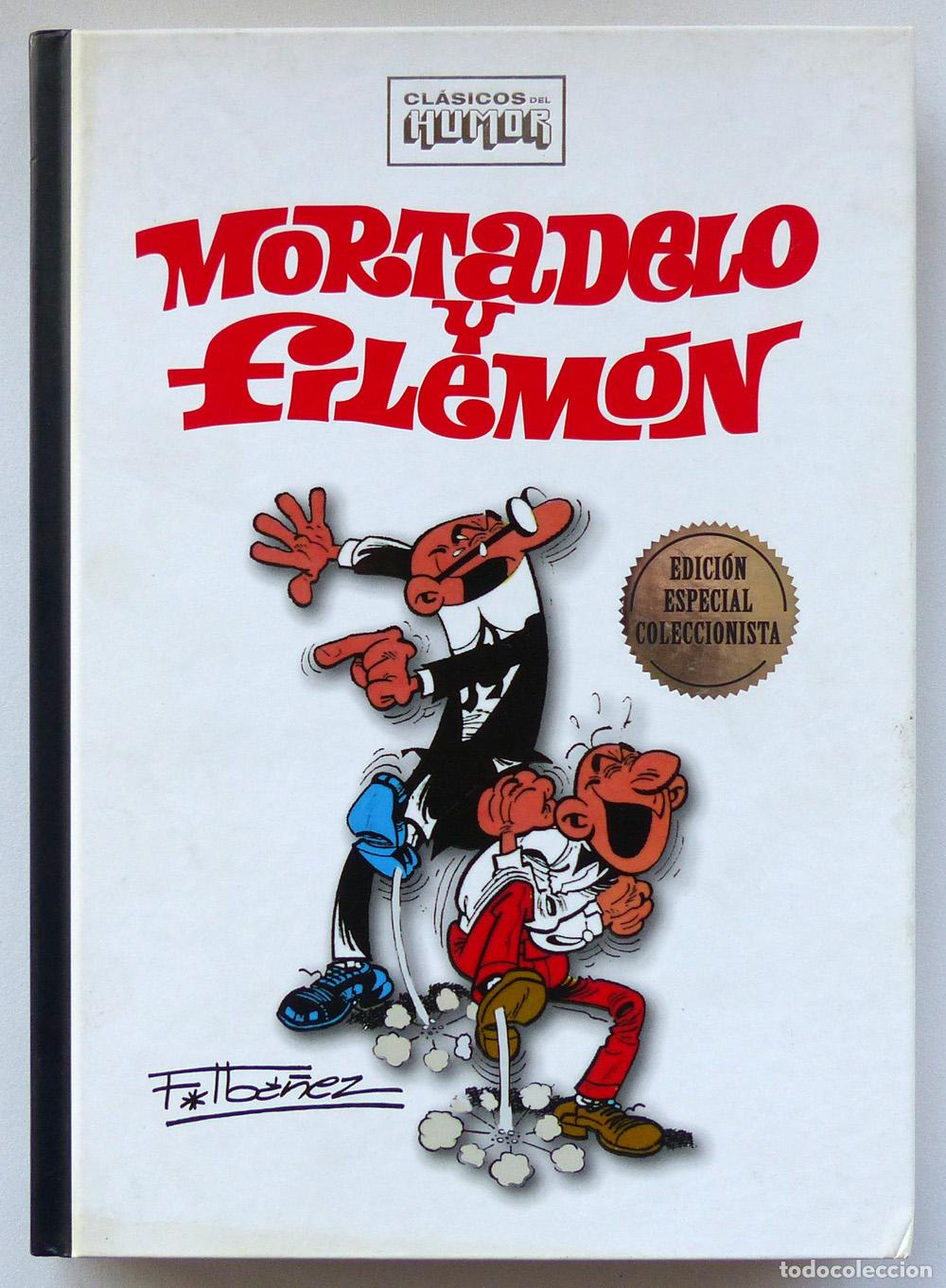 “>
“>
Author:
Francisco Ibáñez Talavera
Country:
Spain (ES)
Book Theme:
Graphic novels, Manga and more
Publisher:
RBA Coleccionables, S.A.
Publishing Year:
2009
He was born in Barcelona, Spain. He started drawing early: at the age of 11 he published his first cartoon in a children’s magazine. Before becoming a full‑time cartoonist, he worked in a bank until 1957. Shortly thereafter he devoted himself fully to comics, joining the editorial Bruguera. On 20 January 1958 the first Mortadelo y Filemón story appeared in Pulgarcito, launching what would become his most famous creation. Over his long career he created many other comic series, including 13, Rue del Percebe, Rompetechos, El botones Sacarino, Pepe Gotera y Otilio, and more. His style is marked by slapstick humour, visual gags, parody, and a continuous succession of jokes. He worked actively for decades, producing tens of thousands of pages. He passed away in Barcelona on 15 July 2023.
National Award for Children’s and Young People’s
Abstract
Mortadelo y Filemón is one of the most iconic Spanish comic series, created by Francisco Ibáñez in 1958. Initially, the duo worked as private detectives under the name “Agencia de Información,” appearing in the magazine Pulgarcito. In 1969, they joined the secret spy agency T.I.A. (a parody of CIA), which allowed the stories to expand into absurd spy, adventure, and slapstick comedy territory. The protagonists are Mortadelo, a master of disguise who often messes things up, and his short-tempered boss Filemón, both engaged in wildly improbable missions often assigned by the despotic “Súper,” with help from supporting characters like Professor Bacterio, the secretaries Ofelia and Irma, and an assortment of villains. The humor is heavily physical and absurd: falls, explosions, disguises gone awry, constant chaos, misunderstandings, and gag-after-gag pacing. It is both a satire of spy and adventure genres, and a deep-rooted piece of Spanish popular culture, with many editions, adaptations (TV, film), and translations. The stories appeal to children and adults alike, combining visual humor, puns (especially linguistic ones), parody, and farce.