


LA DIVINA COMMEDIA -INFERNO / DIVINE COMEDY – HELL
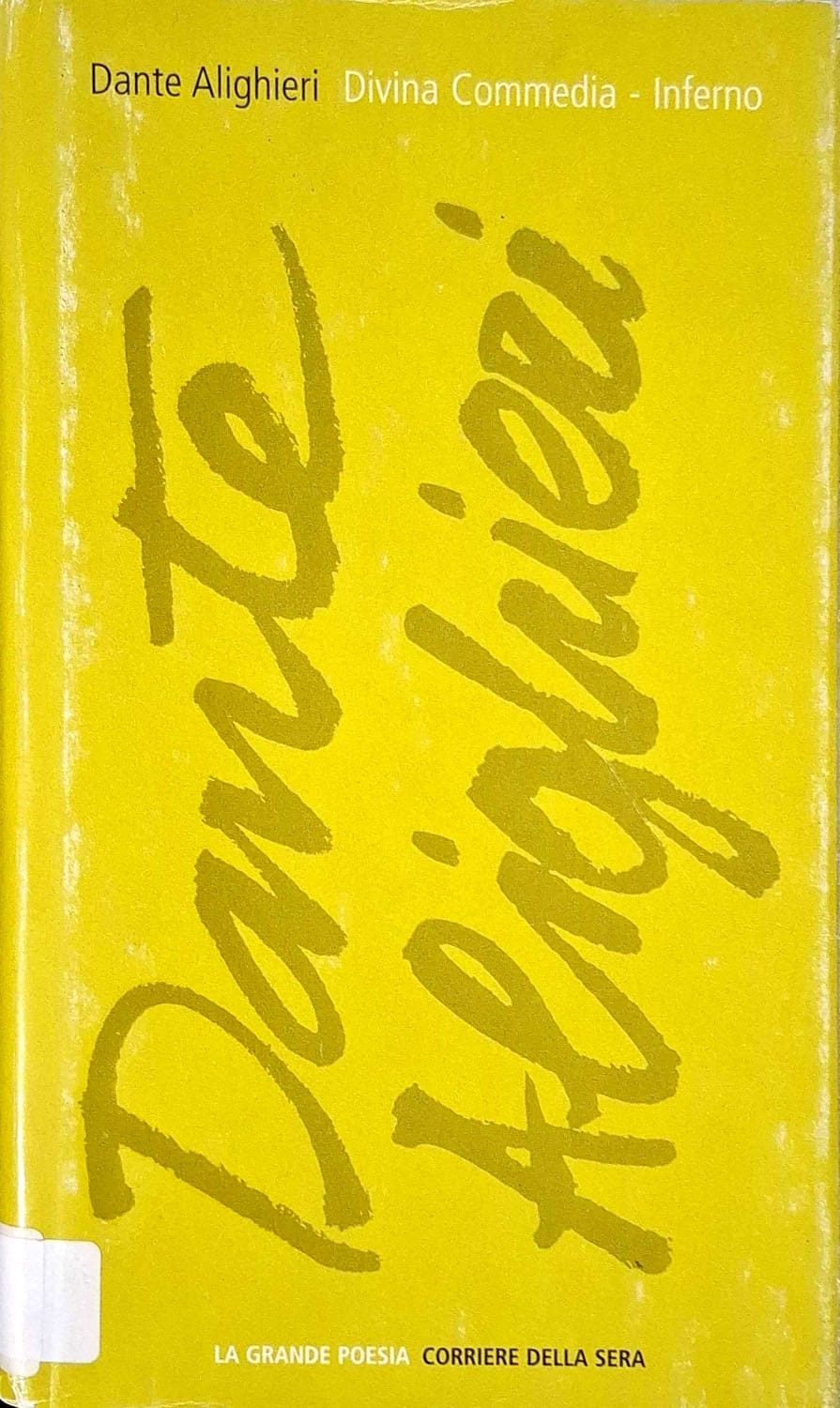 “>
“>
Author:
DANTE ALIGHIERI
Country:
Italy (IT)
Book Theme:
Poets representing your country poetry
Publisher:
LA GRANDE POESIA – CORRIERE DELLA SERA
Publishing Year:
2021
Dante Alighieri (c. 1265–1321) was an Italian poet, writer, and philosopher. His “Divine Comedy,” an epic poem detailing a journey through Hell, Purgatory, and Paradise, is considered a masterpiece of world literature and a foundational work of the Italian language. Born in Florence, he was exiled in 1302 due to political conflicts. He spent his remaining years in Ravenna, completing his magnum opus before his death. Dante’s work profoundly influenced Western thought and literature.
National Award for Children’s and Young People’s
Abstract
Dante Alighieri’s “Divine Comedy – Inferno” is a fundamental work of world literature, written in the
14th century. This poetic composition in tercets not only represents an artistic masterpiece but also
serves as a profound social, political, and theological commentary of the time. The narrative begins
with Dante playing a dual role: “Auctor,” the one who recounts the journey, and “Agens,” the
protagonist, the pilgrim who undertakes the journey.
The work begins with Dante finding himself lost in a dark forest, a symbol of moral confusion and the
loss of the right path. This state of disorientation represents an existential and spiritual crisis,
reflecting the uncertainties of his time. Guided by the Roman poet Virgil, Dante embarks on a
journey through Hell, structured into nine concentric circles, each dedicated to a different type of
sin. Each circle is characterized by symbolic architecture and specific punishments, reflecting the
severity of the sins committed in life.
Dante’s narrative methodology combines allegorical, historical, and philosophical elements. The use
of allegories, whose meanings resonate with the imagination of the time, is particularly prevalent.
For example:
The dark forest: represents disorientation, sin;
The greyhound: a hunting dog, a renewer who will lead to salvation;
The she-wolf: the greater sin, avarice.
Another figure who will guide Dante is Beatrice; unlike Virgil, she allegorically represents faith and
will accompany him in Paradise until the end of his journey.
Speaking of allegories, we note that the choice of Virgil as a guide is not random: he allegorically
represents reason and human knowledge, essential elements for navigating the path toward truth.
Hell is not merely a place of torment but an ordered system of divine justice, where each soul
receives a punishment that is a direct consequence of their earthly actions. This conception of
“contrapasso” is central to the work and underscores the importance of morality and personal
responsibility. This concept can be understood through two approaches: analogy and contrast. In
analogy, contrapasso manifests as harmony between sin and punishment. For example, the gluttons
are forced to eat mud and filth, reflecting their life of excess and desire for food. However, in
contrast, the punishment highlights the distance between the sinner’s behavior and the resulting
suffering. The proud carry immense burdens on their backs, emphasizing their powerlessness against
vanity.
Through the various sinners Dante encounters, the reader is invited to reflect on the consequences
of their choices and the inevitability of divine justice.
Among the most significant characters Dante meets are historical, mythological, and contemporary
figures. Each encounter is laden with meaning and serves to highlight human weaknesses and
virtues. For instance, the punishment of Paolo and Francesca, two lovers condemned to wander
through Hell, illustrates the theme of passion and its destruction. Their story not only evokes pity but
also invites consideration of the role of love and the freedom of choice.